When an employee falls down at a storehouse, when a site visitor at a regional program cuts their hand terribly on an outdoor tents stake, or when a parent passes out at an area event, the very first minutes established the outcome. That truth is why several organisations in Jandakot choose on-site first aid training rather than sending individuals off to remote classrooms. On-site distribution places skills where they matter most, aligns circumstances with real work risks, and constructs confidence across entire teams.
I have run and observed dozens of workplace sessions across Perth suburbs, including several in Jandakot. Fitness instructors who bring a set and an understanding of the site can turn abstract abilities into muscle memory in far less hours. Listed below I detail exactly how on-site programs are organised, what employers need to expect, and how to match course content with legal and functional demands. I consist of pragmatic notes on devices, certification, refresher timing, and event-first-aid logistics.
Why employers bring the trainer to Jandakot
Workplaces in Jandakot range from light commercial backyards and aviation assistance solutions to small workplaces and event venues. Sending out team to a main training carrier expenses travel time, interrupts rosters, and fragments groups; the choice is to set aside a single block of time and bring a fitness instructor to the premises. On-site training decreases downtime because sessions can be scheduled around shifts, equipment, and busy durations. For events, the instructor can run a short, useful CPR and injury action course prior to doors open, customized to the specific crowd size and danger profile.
There is another practical advantage: context. When training occurs on the same flooring where equipment rests, students can exercise securing a casualty in the hallway they really utilize. That uniqueness matters for small but consequential decisions such as which doorway to clear, just how to gear an improvisated cot from nearby products, or where to terminal the chosen -responder's kit.
Course kinds and what they cover
Most service providers provide 2 core pathways: approved unit-based first aid courses that lead to a Statement of Accomplishment, and useful, non-accredited workplace understanding sessions customized to certain threats. Approved courses typically include HLTAID011 Supply First Aid and HLTAID009 Offer cardiopulmonary resuscitation, or incorporated modules under a single certificate. These deliverables meet many governing and insurer expectations for a "first aid certificate Jandakot" employers ask for.
A basic recognized session covers primary study, CPR for grownups and youngsters, choking, severe bleeding control consisting of pressure and tourniquet usage, shock acknowledgment, standard fracture management, and emergency oxygen use when oxygen administration belongs to the work environment strategy. Some courses add mental health first aid as a separate device, or a shortmodule on anaphylaxis and adrenaline auto-injector usage. For event-specific requirements, fitness instructors can emphasise crowd management, warm disease, substance-related occurrences, and interaction with paramedics.
Practical instance: a producing website I investigated in Jandakot desired a single day course for 12 team. We ran the approved components in the early morning, with 2 CPR terminals and sufficient mannequins so each trainee turned through compressions and air flows consistently. In the mid-day we ran 3 onsite scenarios: a laceration from sheet metal, a crush-injury mimic utilizing a heavy pallet, and a simulated cardiac arrest behind a machine. The circumstances utilized existing first aid rooms, departures and radios. After that day, nominated initially aiders can define particular steps to clear a path for an ambulance and identify where extra PPE lived.
Who must participate in and exactly how many
Regulations do not constantly prescribe a single variety of first aiders per work environment; rather, advice is risk-based. For typical low-to-medium danger workplaces, one skilled first aider per 20 to 50 employees is a sensible variety. For risky sites such as stockrooms with hefty plant, a bigger ratio is prudent. Event organisers need to scale training by peak crowd numbers and the nature of activities. A showing off occasion with running races will certainly call for more responders than a seated community lecture.
Nominated first aiders should be team that will exist during busiest hours and that can do physically demanding jobs if essential. It is wise to include both younger and older staff members, male and female team, and people who routinely work outside typical office hours. Sufficient redundancy protects against protection voids when somebody is on leave.
Customisation and threat profiling
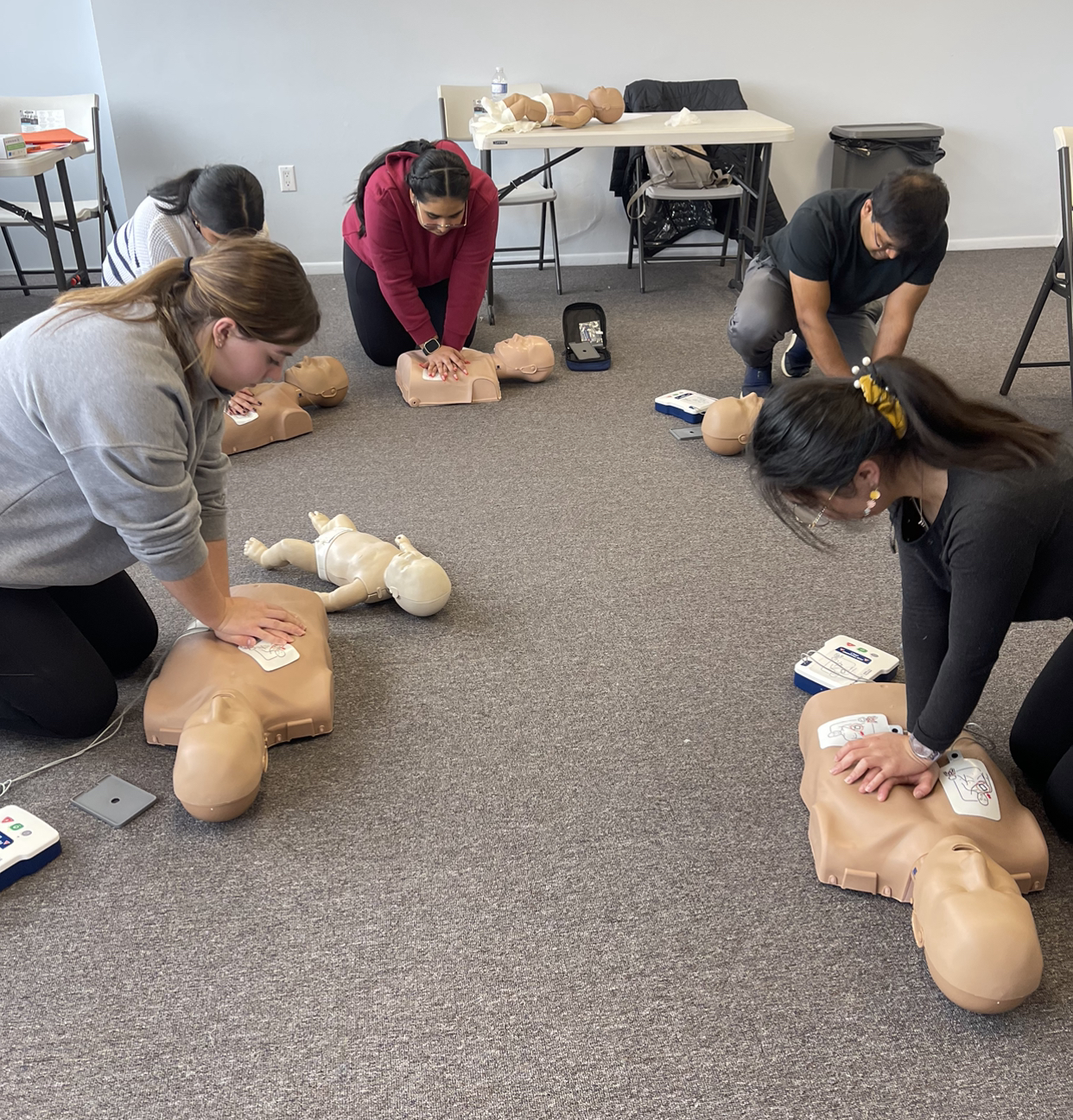
An effective on-site course starts with a brief threat analysis. Fitness instructors who have actually functioned here request pictures of the site, a duplicate of the event register for the previous 12 to 24 months, and a rundown of readily available medical equipment. That enables them to tailor situations, provide the right variety of mannequins for CPR practices, and consist of modules such as anaphylaxis reaction where relevant.
For example, a Jandakot event with food stalls demands durable training on allergic reactions and epinephrine auto-injector methods. A tiny manufacturing yard should emphasise extreme bleeding control, entrapment action, and throat or air passage monitoring. On-site delivery allows the fitness instructor incorporate the real rescue access route right into the simulated emergency communication with 000, educating staff exactly what to say and just how to guide paramedics in.
Practical logistics: what an employer should prepare
A smooth on-site session needs a few useful things from the host. Below is a brief list to make the day efficient.
An area or sheltered area big enough for useful terminals, accessibility to power, and clean surface areas for mannequins. A checklist of participants with duties and change times, so the fitness instructor can series understanding and include late-shift plans. Copies of current incident records or threat registers to tailor-make scenarios. An area map for rescue access and instructions for where simulated casualties should be put throughout drills. PPE and a couple of handwear covers and glasses if the workplace uses specific protective equipment the -responder would normally wear.This list maintains the session sensible and minimises disturbances. If your website lacks first aid training Jandakot region a tidy area, an event gazebo or a cleared office will work; the main demand is safe area for kneeling and doing CPR.
Certification, revivals and legal expectations
An HLTAID011 Statement of Accomplishment in the Country wide Identified Training structure usually lasts three years for first aid proficiencies, with CPR refreshers usually called for every twelve month. Employers should ask the fitness instructor which devices are evaluated and which are demonstration-only. For lawful conformity, a clear document of attendees, evaluation results, and released certifications belongs in the human resources or safety and security filing system.
A typical error is assuming a single training day for life fixes a staffing trouble. Skills degeneration is real; simulated compressions without comments will deteriorate over months. Numerous workplaces implement a short quarterly practical drill lasting 20 to thirty minutes. A CPR practice on a mannequin with automated comments every 3 months substantially improves retention compared with yearly training alone.
Costs and trade-offs
On-site training has clear advantages however likewise trade-offs. Typical rates mirrors traveling time, fitness instructor preparation, devices provided and the course size. For tiny groups, the per-head price is greater than sending people to team courses at a central location. For medium to huge teams, on-site becomes more affordable and reduces shed efficiency. If your workplace has multiple shifts, contrast 2 alternatives: run an on-site course extending those changes, or spend for multiple off-site courses and team travel.
Another trade-off involves depth versus comfort. A pressed 2 to 3 hour recognition session can obtain every person aware of basic CPR and AED use, which is outstanding for huge event volunteer pools. Yet it will not satisfy certification requirements where a formally trained first aider is needed by law or insurance policy. Equilibrium convenience and conformity: utilize recognition sessions for broad insurance coverage and certified courses for chosen responders.
Equipment and AEDs
Automated external defibrillators are increasingly typical at workplaces and event websites in Jandakot. Practical training must consist of AED use on mannequins so staff come to be comfy with pad placement and adhering to voice motivates under stress. Choose about AED procurement based on predicted feedback times from local ambulance services, occasion thickness, and the expense of an AED relative to risk.
Beyond an AED, a well-stocked work environment package surpasses bandages. Take into consideration consisting of tourniquets, haemostatic dressings, splints, blankets, and an oxygen cyndrical tube if personnel are trained to first aid course for tradies utilize it. Train responders to inspect kit expiry days monthly, and to revolve consumables right into website first aid materials to avoid waste. A practical behavior I advise is a basic stamp inside the package with the next audit day; it ends up being an aesthetic cue for maintenance.
Examples from Jandakot events
At a weekend motorsport event near Jandakot, organisers encountered 3 concurrent threats: heavy machinery, gas handling, and large viewer crowds. The on-site course consisted of a tailored component on chemical burns and inhalation injury, utilizing the actual area of the marshal articles to educate casualty extraction and radio handover expressions that the occasion sent out to security and guardians. After training, the occasion assigned 2 roaming initial aiders who carried portable haemorrhage control kits in addition to the central first aid tent.
For a smaller sized business launch organized in Jandakot, a one-day recognized first aid and CPR course satisfied both the insurer and the company's threat register. The instructor spent thirty minutes mapping office exits and parking area accessibility; that small investment paid off when the post-course exercise determined that a gateway would need to be opened to speed up ambulance access.
How to select a trainer in Jandakot
Choose a carrier that can demonstrate recent recognized delivery and who will reveal an example lesson strategy. Request for references from comparable offices or occasions and examine that the fitness instructor keeps money in their very own first aid abilities. Practical credentials to verify consist of an existing training assessor credentials and up-to-date enrollment with a training organisation. A fitness instructor with local experience will certainly recognize with the closest rescue station and typical ambulance response times for Jandakot, which can inform decisions concerning AED placement and responder numbers.
A short arrangement inquiry worth asking is whether the company will deliver a typical bundle or will include a complimentary pre-course website walk-through. The last indicates a consultative strategy and improves course relevance.
Refresher training and keeping competence
After the preliminary course, construct straightforward systems to maintain abilities active. A quarterly 20-minute functional session works and affordable. Use a mannequin with comments or run a 15-minute blind scenario where one employee calls 000 and another leads compressions; then debrief. Keep records of these drills as proof of energetic threat management for insurers.
Plan formal re-certification ahead of expiry. An excellent method is to arrange yearly CPR refresher courses and replace the HLTAID011 every 24 to 36 months relying on organisational policy. Preserving a schedule alert with at the very least 3 months' notice prevents lapses.
Final considerations for event organisers
Events have distinct characteristics. Volunteers rotate, crowd behaviour adjustments via the day, and environmental factors such as warm can produce clusters of incidents. For events, take into consideration a combined design: a brief accredited pack for the main camping tent team and much deeper accredited training for roaming initial aiders and clinical leads. If the occasion makes use of paid medical groups, guarantee regional staff still receive fundamental CPR and haemorrhage control training so they can act prior to specialists arrive.
A last pragmatic detail: interact that the very first aiders are plainly to participants. Basic signage, a pinned map at each entrance factor, and a public address news at the beginning can minimize complication. When staff understand who is trained, the initial feedback is quicker and much less chaotic.
If you need a customized quote for on-site first aid training in Jandakot, prepare the number of guests, the kind of workplace or occasion, and a short occurrence history for the last one year. A brief conversation with a trustworthy provider will certainly generate a clear strategy that fulfills legal requirements and useful demands, which leaves teams better prepared when mins matter.